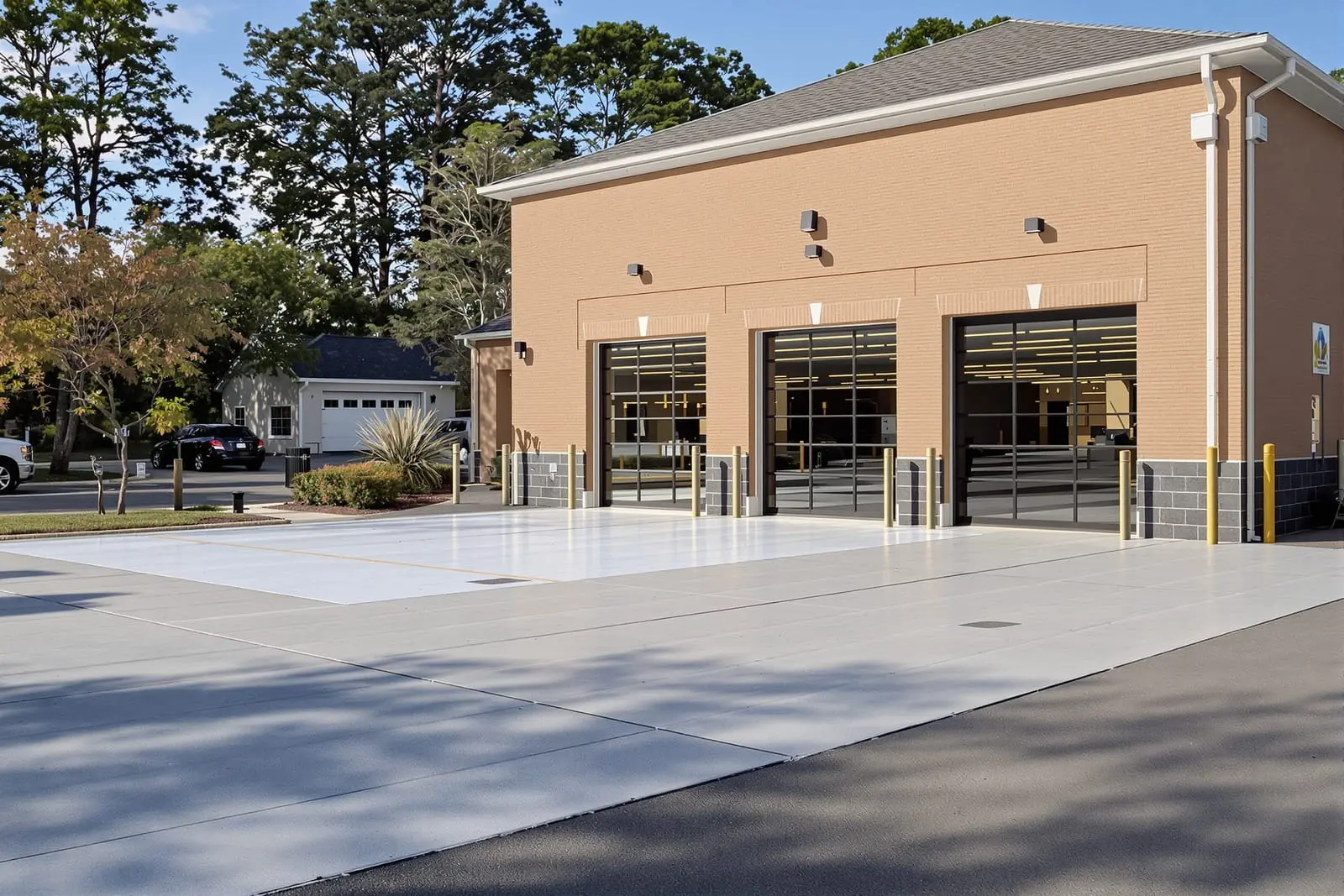
Keep freight moving with robust commercial concrete slabs in Arlington, TX. We pour loading docks, truck aprons, equipment pads, and other heavy duty flatwork. Our designs account for wheel loads, turning, and impact to reduce cracking and failure. Get concrete placements that stand up to daily operations and harsh conditions.
Brava Concrete Arlington provides professional commercial concrete slab throughout Arlington, TX and the surrounding area. Our licensed, insured crew delivers safe, clean, on-time work with a free estimate before anything begins. Call (817) 670-3997 or request your free quote.
Loading docks and commercial slabs built for real Arlington traffic
Loading areas in Arlington see a lot of punishment: forklifts, box trucks, semi trailers, pallet jacks, and constant temperature swings. Brava Concrete Arlington designs and pours each commercial concrete slab to match how you actually use the space, not just a generic thickness pulled from a chart.
When we visit your property, we start by looking at how trucks approach, where they turn their wheels, where trailers sit while loading, and where water naturally drains. A slab for a small retail stockroom with occasional box truck deliveries is not the same as a dock serving 53 foot trailers all day. We talk through your equipment weights, rack layouts, and any future expansion you are considering so the slab and loading dock you pay for today will still work ten or fifteen years from now.
Arlington soil changes a lot from block to block. Parts of town sit on expansive clay that swells when wet and shrinks in summer heat. Others have better draining sandy or loamy soil. That local ground condition affects how we design the base, thickness, reinforcement, and joint layout of your commercial concrete slab, and it is one of the biggest reasons using a contractor who works in Arlington all week long really matters.
How we design and build durable commercial concrete slabs
Brava Concrete Arlington follows a step by step process for every commercial slab project, so you know exactly what is happening on your job site.
1. Site evaluation and layout. We verify property lines, check clearances for trucks and trailers, locate existing utilities, and confirm elevations so water drains away from buildings, doors, and dock plates. For new builds we coordinate with your GC or architect to match their plans with real world conditions on site.
2. Subgrade and base preparation. We strip soft topsoil and organic material, then proof roll the area so weak spots are found before concrete arrives. In much of Arlington we recommend at least 4 inches of compacted crushed concrete or flex base under loading docks and main travel lanes. Heavier traffic zones may use 6 inches or more. Proper compaction is critical, since most slab failures start below the concrete, not in it.
3. Thickness, mix design, and reinforcement. For light duty commercial slabs, such as small shops or storage areas, 5 inches of concrete with fiber reinforcement can be sufficient. For loading docks and warehouse drive lanes with frequent heavy vehicles, 6 to 8 inches with rebar or welded wire mesh is more typical. We usually specify 4,000 to 5,000 psi concrete with low water content and air entrainment where freeze and thaw exposure is expected. On high performance projects we may add micro fibers for crack control plus corrosion resistant rebar around dock edges and drain pits.
4. Pouring, finishing, and curing. Concrete is placed using chutes, pumps, or conveyors depending on site access. We pay close attention to vibration and consolidation around forms, rebar, and drain boxes so there are no honeycombs or voids. Finishes vary by use: broom finishes for outdoor traction, hard trowel finishes inside warehouses, or tined textures on ramps where extra grip is needed. Curing is managed with compounds, wet curing, or coverings so the slab gains strength evenly and resists early shrinkage cracks.
5. Final cuts and sealing. We saw control joints at calculated spacing to encourage shrinkage cracks to form in those straight lines instead of randomly through your floors. Where chemicals, food products, or constant forklift traffic are expected we can apply industrial sealers or hardeners that reduce dusting and make cleanup easier.
Loading dock design details Arlington owners should think about
A good loading dock is a mix of concrete, steel, and layout choices that work with the specific trucks and equipment that visit your property. Brava Concrete Arlington helps you work through those small details that often get missed.
Dock height and approach are the starting point. In Arlington most warehouses and distribution centers match dock height to standard trailer beds, but retail and mixed use spaces may need lower docks or combination docks that work with box trucks and pickups. We evaluate whether you need a level approach, a slight uphill grade, or a recessed truck court so dock levelers operate in their proper range.
The concrete at dock faces takes constant impact from trailer bumping, lift gate legs, and steel dock levelers. We often thicken the slab at the dock edge, install additional rebar cages, and use steel angle or embedded curb steel to protect the concrete nose. For busy docks we may design a separate high strength landing strip where trailer landing gear rests, so punches and spalls do not spread across the main slab.
Drainage is especially important in North Texas storms. Water that sits at dock doors leads to slick surfaces and deteriorating seals. We slope the slabs correctly, add trench drains or area inlets where needed, and plan routes that do not send all your roof runoff across employee walking paths.
Finally, we recommend thinking through traffic patterns early. Will forklifts cross from dock to warehouse in one straight line or need to turn quickly on the dock apron. Are there blind corners for truck drivers. Do you expect overnight parking that concentrates load in specific areas. These answers help us orient the slab joints and reinforcing patterns so they work with your use instead of against it.
What affects the cost of a commercial concrete slab in Arlington
No two commercial concrete slab projects are priced exactly the same, even if they have similar square footage. Brava Concrete Arlington is transparent about what drives your price, so you can make smart decisions and avoid surprises.
Thickness and reinforcement are usually the largest variables. A 6 inch slab with rebar on 18 inch centers costs more upfront than a 5 inch fiber reinforced slab, but if you are running loaded forklifts or heavy delivery trucks all day, the heavier design usually pays for itself in reduced repairs. We will show you side by side options and explain what each is truly designed to handle.
Site conditions also matter. Poor access that requires pumping, tight spaces where concrete trucks cannot easily maneuver, or extensive demolition and haul off of existing slabs increase labor and equipment time. On some Arlington sites with very poor soil or old fill, we may recommend soil stabilization or thicker base material. This adds cost, but cutting corners here is one of the fastest ways to end up paying twice.
Finishes and extras influence the final number as well. Standard broom or trowel finishes are most economical. If you need hardeners, sealers, floor flatness tolerances for narrow aisle racking, or decorative elements in customer visible areas, we can price those options clearly. Additions like trench drains, dock pit forming, curb work, and bollards to protect doors and equipment are typically itemized so you can choose what fits your budget and risk tolerance.
Schedule can affect pricing too. If we need to pour off hours to avoid shutting down your operations, or phase work in small sections so you can keep certain docks open, labor and mobilization costs may be higher. We will coordinate carefully with your operations or property management team so your loading area upgrade is as painless as possible.
Commercial concrete work is not the place to gamble on a contractor who mostly does driveways. Brava Concrete Arlington spends a large share of its workweek on loading docks and commercial slabs for local warehouses, retail centers, light industrial shops, and logistics yards.
Because we work throughout Arlington, we already know which neighborhoods have expansive clay that needs more attention under heavy slabs and which areas drain better. We are familiar with local inspectors and typical city requirements for commercial flatwork, which helps your project move faster and avoids failed inspections or rework. When something unexpected comes up, you get a crew that has probably already solved the same problem nearby.
Communication and phasing are a big part of commercial success. Before we mobilize, we sit down with you to understand your busiest shipping hours, tenant move in dates, and any hard deadlines from corporate or the city. From there we sequence demolition, base prep, pouring, and curing so at least some of your docks remain usable whenever possible. If you need temporary ramps or alternate loading areas while concrete cures, we can help plan that too.
After the pour, we walk the slab with you to review joints, slopes, drain operation, and finish quality. We also explain basic maintenance: when to avoid deicing salts, how to manage heavy point loads from storage racks or containers, and what to watch for in the first seasonal cycles. You get a local partner who is still here in Arlington if you have questions a year from now, not a crew that disappears as soon as the last truck leaves.
“
Professional loading docks & commercial slabs, done right the first time, quality materials, honest pricing, and results that last.
Brava Concrete Arlington
Loading Docks & Commercial Slabs Across Our Service Area